AI GTM Strategy
Cold email from India to US buyers: why it fails, and the six fixes
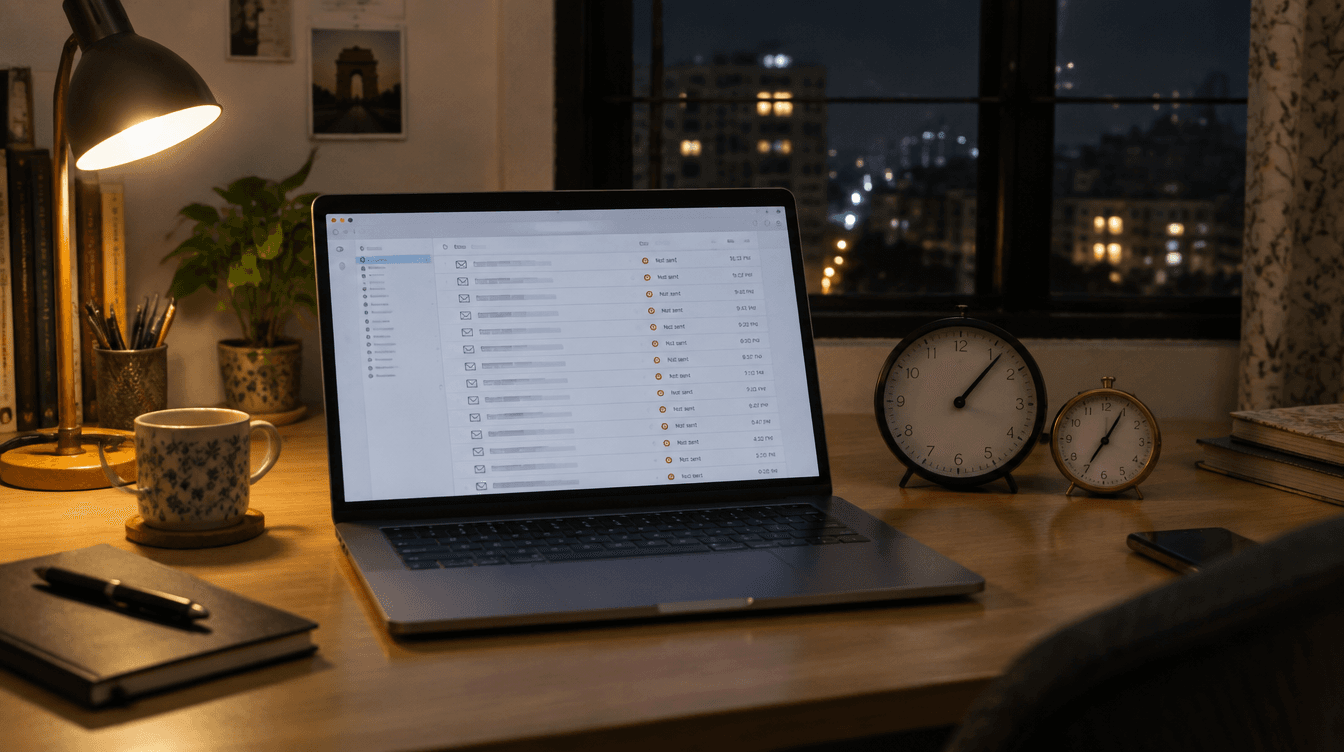
We build outbound engines for founders selling into the US and the UK. The pattern that repeats most often is an Indian SaaS company with a good product, a working sales motion at home, and a US campaign that has sent 4,000 emails and booked two meetings. The founder assumes the market is harder. Usually the setup is wrong in six specific ways, and each one is fixable in a week.
1. You are sending at the wrong time
Sequences fire when your team starts work. That is 10am IST, which is half past midnight in New York and 9:30pm the previous evening in San Francisco. Your email is the fourteenth unread item when the buyer picks up the phone at 7am, and it looks like every other overnight cold pitch.
Fix: schedule per prospect timezone, not per sender. Every step lands between 7:30am and 9:30am in the buyer's own zone, Tuesday to Thursday. If your sequencer cannot do that, the sequencer is the problem.
2. Your domain has no US history
Google and Microsoft score sending domains on history. A domain that has only ever sent to Indian inboxes, or has never sent cold mail at all, is unknown. Unknown mail from an unfamiliar country gets throttled, then sampled, then read last. Add a missing DMARC record and you are in the promotions tab before the copy is even evaluated.
Fix: buy two or three lookalike domains, host the mailboxes with a US provider, set SPF, DKIM and DMARC on day one, and warm them for three weeks against real inboxes before a prospect sees anything. Your main domain never sends cold mail. We published the full checklist in the deliverability post.
3. The copy reads as offshore
"I hope this email finds you well." "Kindly revert at your earliest convenience." "We are a leading provider of." A US buyer has read ten thousand of these from lead-gen shops and has a reflex for them. It is not about grammar. It is register. Indian business English is more formal than American business English, and formality in a cold email reads as a template.
Fix: first person, under 80 words, one specific observation about their company, one ask. Founder signs it. No "leading provider", no "synergy", no "revert". Read it aloud in an American accent; if it sounds like a pitch, cut it in half.
4. There is no signal
Apollo gives you a list of 4,000 VP Sales in US SaaS. That is a filter, not a reason to write. The buyer knows you pulled their title from a database because the email could have gone to anyone with that title.
Fix: write only to accounts where something happened in the last 30 days. A new VP Sales, a funding round, a job post for the role your product replaces, a CRM switch, a US office opening. Name the event in the first line. In our engines, signal-led lists out-reply filter-led lists every time we have run them side by side, because the buyer can tell you noticed.
5. Nobody owns the replies in US hours
The sequence works, a buyer replies at 2pm Eastern, and the reply sits until 9am IST the next morning. Eighteen hours. By then they have moved on or booked a competitor. A slow reply after a cold email tells the buyer what working with you will be like.
Fix: one named person answers positive replies within two hours of US business hours. That means a late shift in India, a US-based contractor, or an agent that triages and books directly into a calendar with US slots. A reply that says "Tuesday 9am Pacific works, here is the link" inside an hour is worth more than any copy improvement.
6. You never proved the message in the US by hand
Outbound is an amplifier. Point it at a message that converts and you get more meetings. Point it at a message nobody has tested on a US buyer and you get a very expensive confirmation that it does not work, plus a burned list you cannot contact again for six months.
Fix: before automating, book five US conversations by hand. LinkedIn, warm intros, a founder-to-founder note. Learn which objection comes first and what makes them lean in. Then build the sequence around that. Five manual meetings tell you more than five thousand sends.
What the setup looks like when it works
Picture a Delhi-based team selling into the US Midwest. Domains warmed for three weeks, sequences on Central time, first line names the buyer's new SDR job posting, replies answered by a founder working a 6pm to midnight IST shift for the first month. Meetings on the calendar in week three. Nothing about the product changed.
If you want the setup done for you, the US market entry page has the 14-day plan and the price. If you want to do it yourself, the six fixes above are the whole list.